Posted on 17 July 2010. Tags: Sams Club, Wal-Mart
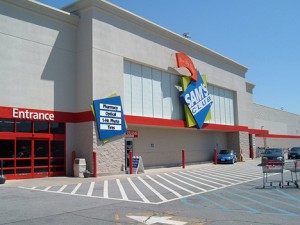 In the world of financial crisis, Wal-Mart’s Sam’s Club, a member only wholesaler’s club, has outlined a lending hand to its small business customers by testing to offer discounted loans. It is a rebranded arrangement with Superior Financial Group, stationed in Walnut Creek, California, the nation’s most active Small Business Administration lender. They specialize in “express” smaller loans from $5,000 to $25,000.
The process of applying for the loan through Sam’s Club as a member, small businesses will get $100 off Superior Financial’s loan packaging fee (typically $350 to $450, after the discount) and 0.25% off the market interest rate. Sam’s Club gets a $50 referral fee for each loan funded.
Small companies have a desolating situation with the banks. ”Unable to find credit, many small businesses have had to shut their doors, and some of the survivors are still struggling to find adequate financing,” a recent government study concluded. In this situation of the small business owners, Sam’s Club came up with this purpose in giving loans to them that if customers are short of cash, they won’t come shopping and spend.
Small businesses “are a big portion of our business, so if we can help small business, that helps us,” said Hiren Patel, director of financial services at Sam’s Club. Rival Wholesaler Costco did the same in the early 2000’s but failed three times. Their problem lies in the fact that due to their small scale business members, the members do not get higher approval rates they need from Costco’s financial partners.
The Sam’s Club arrangement is an open-ended pilot program. “We will monitor on a monthly basis, report back to our executives on a quarterly basis, and see where we want to go with this,” Patel said.
Posted in Business, Featured News
Posted on 16 July 2010. Tags: lawsuit, NTP
 The United States is the only major country that gives patents to those who can prove they invented an item before someone else’s patent was filed. It is for this reason that a pricey legal suit is being slapped to giant tech companies.
NTP will again shake the tech world with its new lawsuit against big companies like Google, Apple, LG and the rest of the electronic companies. NTP is one of the largest patent companies in the world. To remind everyone how big this company is: Few years ago they’ve filed a very succulent and expensive lawsuit against Blackberry maker Research in Motion (RIMM). It was a enormous $613 million to settle the charges in 2006. They’ve got in return a license allowing it to use patented NTP technology in all of RIM’s current and future products.
NTP announced, the companies who will face legal lawsuits with them are: Google, Apple, HTC, LG Electronics, Microsoft and Motorola. The lawsuit is all about alleged infringements of eight NTP patents that is related to wireless email delivery. The filing of suit is necessary according to Cofounder Donald Stout, to ensure that those companies who are in breach by using NTP’s patents will required to pay a licensing fee.
Some of the cases still pending are companies like AT&T, Sprint Nextel, T-Mobile, and Verizon Wireless for similar infringements. But Google’s spokeman did not want to comment on the current issue as well as Microsoft and HTC until the papers are served to them. However, the other three phone companies have not reacted to NTP’s legal lawsuit.
These lawsuits are often a problem with big companies as they are only allowed to collect patents for inventions that they will never manufacture. But that’s not always the case here. These patent trolls can be sued anytime if they become too greedy to claim its rights rather than arrange some kind of licensing with NTP.
Currently, a senate bill is in the process to protect companies like NTP and will have transition to a “first to file” system rather than “first to invent” approach on the matter.
Posted in Business, Featured News
Posted on 08 July 2010. Tags: BP, oil spill, Tourism
 The four biggest industries in the Gulf of Mexico are oil, tourism, fishing and shipping with a yearly activity of $234 Billion. Two-thirds of that amount is in the United States, with the other third in Mexico.
According to the A&M report, tourism is considered the second largest industry in the Gulf, and it ranks right behind oil. About 46% of the Gulf economy, or over $100 billion a year, is from tourism dollars,
With oil spill going on for several month now along Gulf of Mexico, one of those badly affected is Florida with its 23 Gulf Coast counties.
Florida has their tourism to boast but it could finish off losing 195,000 jobs and $10.9 billion in spending if the 23 Gulf Coast counties drop their tourism and leisure jobs to half, according to the research of University of Central Florida. Taken Florida will only lose 10% of their tourism and leisure jobs; still it would lose 39,000 jobs and $2.2 billion in spending.
Sean Snaith, the Director of UCF’s Institute for Economic Competitiveness had expressed concern and said, “This is just not what we need in a state with 12% unemployment and where the tourism industry was already on shaky legs to begin with. We were already predicting it would take a year and a half to two years for the sector just to recover from the recession, and now it has to recover from a recession and an oil spill.”
Before BP’s oil spill in Gulf of Mexico, the leisure and tourism industries in Florida’s Gulf counties produced 269,000 jobs and $12.4 billion in spending per year, according to Snaith.
Companies across the entire state are badly affected as stores, restaurants and other businesses on the Gulf Coast are forced to close.
It is a chain of reaction, “Less business means less business for a wholesaler who supplies to a restaurant, and less business for the wholesaler in turn means less business for the mechanic of refrigerated trucks that the wholesaler uses to deliver the supplies,” said Snaith. He further said that the actual impact of the oil spill on Florida’s economy is unforeseeable, in spite of his research providing some possible outcomes. It is a means to see what’s coming up but difficult to enumerate.
Posted in Business, Featured News
Posted on 06 July 2010. Tags: Bloomberg, economy, Recovery
 It is clear that the U.S economy is indeed recovering but indicators suggest that the recovery is much slower than expected by analysts. Employment at companies was expected to rise by 110, 000 as forecasted by economists in a Bloomberg News survey. Instead employment at companies rose 83,000. It should be noted, however, that the jobless rate measured a decline to 9.5% down from 9.7%.
A look at the Standard and Poor’s 500 index is also very revealing. The said index fell 0.3% to 1,024.18 at 11.23a.m in New York after it had in fact risen as much as 0.5%. The dollar weakened to $1.2594 per euro moving from $1.2527 late yesterday.
Such indicators have forced John Silva, chief economist at Wells Fargo Security LLC in Charlotte, North Carolina, to state that there is a recovery but not at the pace people expected. Using some economic jargon, he further explained that it was neither a V-shaped recovery nor a double-dip recession. What’s for certain is that the situation is a very frustrating one.
A look at the retail sector tells the same tale. Last month, the largest consumer electronics retailer, Best Buy, reported a first quarter profit but this recorded profit rose less than projected by analysts. The fact is that consumer spending is down and in fact, C.E.O of Finish Line Inc., Glenn Lyon, expects a less than robust consumer environment in the second half of this year.
Even President Obama has acknowledged that the recovery is slow and while the number of contracts to purchase pre-owned homes plunged 30% in May after the expiration of the home buyer tax credit, it seems certain that the world’s largest economy will take years before it can recovery the 8 million jobs lost during the recession.
Posted in Business, Featured News
Posted on 05 July 2010. Tags: Business, Jeanne Bliss, Love
 There is an old adage that says the customer is always right. Despite this old saying, there are many companies that appear not to understand the importance of the customer to the survival of the business. I am sure almost everyone has had some bad experience with one company or the other. Jeanne Bliss, an expert in building customer loyalty seeks to educate companies and business people about the importance of customer loyalty.
Her philosophy is based on the belief that the best marketing strategy a company can pursue is to become a beloved company. She therefore sets out ways via which a company can become that beloved entity. In summarizing the key points pertaining to how businesses can encourage and promote customer loyalty, it is fitting to start with the results of Bliss’ research. Bliss discovered that companies with excellent customer service were immune to recent market swings. The message here is that customers need to be treated right. She implores businesses to create what she calls “wow” moments. In illustrating what a “wow” moment actualities, Bliss referred to a company that sought to say sorry by sending apple pies labeled Humble Pie. A good company knows how to say sorry.
She calls upon companies to banish any process or protocol that puts customers on the defensive and encourages leaders in business to set the example by being respectful to customers. Luckily for interested persons, Bliss has written two books within which you can study her postulations, ideas and views.
Posted in Business, Featured News
Posted on 04 July 2010. Tags: Brokerage Firms, Caja Venezolana, Hugo Chavez
 When Venezuelan President Hugo Chavez closed the unregulated currency market in May, he seized approximately 40 brokerages. Traders and other staff found themselves unemployed. The fact is that there were charges of setting artificial rates, the scourge of capital flight and money laundering.
Chavez’s actions have forced Noris Aguirre, director at Caja Venezolana de Valores to lament that the brokerage business is in its current rate would soon be something of the past for Venezuela. Chavez has declared that Venezuela does not need companies which exploit loop-holes to enrich themselves. As a result since November Venezuela has closed 4 trading firms and seized 35% of all the trading firms.
It should be noted that the brokerage industry shot up from 2005 right up to 2010. Bond swaps were than by employers for those companies who failed to receive authorization from the government, but the bond trading rates plunged to 8.2 per dollar. Ironically, this occurred 7 days before Hugo Chavez closed the market.
On June 9 the market was re-opened and the maximum rate was set while at the same time the amount which could be purchased was limited. The average rate is now approximately 5.3 bolivars per dollar but there are also 2 official exchange rates at 4.3 for imports and 2.6 bolivars per dollar.
Meanwhile the debate continues over the job situation as Venezuela’s unemployment rate rose to 8.1% in May up from 7.7% a year earlier. Time will tell whether Chavez’s attack on brokerage firms was indeed good for the economy and the Venezuelan people.
Posted in Business, Featured News
Posted on 02 July 2010. Tags: economy, Obama, PayNet
 Data released by PayNet Inc. on Thursday shows that borrowing done by many small businesses fell to its lowest in 7 months. In addition, the Thomson Reuters which is known for measuring the overall financing done with any and every small business, dropped about 5% from the previous month. It should be noted that this was the 4th lowest level on record. What does all this mean?
Well, the president and founder of PayNet, William Phelan has stated that the numbers suggest that the U.S economic recovery has stalled. He alleges that small businesses are skeptical about expanding and are instead retaining their capital since the future is uncertain. Meanwhile, the U.S government is expected to release some daunting data on Friday revealing that the economy actually shed 110,000 jobs in June.
President Obama has expressed concern over the pace of job growth recovery and has clamored for targeted measures to assist small business in the drive to invest but with the plans to overhaul the health care sector, small businesses remain in a state of inertia due to the blanket of uncertainty the hovers over the U.S economy.
To add to the blanket of uncertainty, Phelan has proffered that the possibility of a double dip recession cannot be discounted. But one silver lining exists for the economic outlook. In a separate report by PayNet, it was revealed that fewer companies are falling behind on loan payments. This is indeed good news but does not mean we are ‘out of the woods’ as yet.
Posted in Business, Featured News
Posted on 30 June 2010. Tags: Cyberspace, ID, Wired Age
 We live in what can be dubbed a ‘wired’ age. Millions of transaction and interactions, occur, online daily. Despite this reality we have failed to arrive at a truly comprehensive way to secure online identities. The current protocol involving usernames and passwords is clearly out-dated and identity fraud is still with us.
There is hope as the federal government is in hope of introducing a new type of system dubbed the Identity Ecosystem. Highlighted in a released draft document, “National Strategy for Trusted Identities in Cyberspace” (NSTIC), the Identity Ecosystem would make available to Americans the option of choosing a single authenticated ID for any type of online money transaction revealing only the minimum info for any such transaction. This proposed system is a blessing since as it stands now the only online ID management options available are tools such as OpenID and Microsoft’s U-Prove but these tools are best used in cases of low-assurance clearance. The Identity Ecosystem is at this point proposed as a voluntary system but it is sure to become popular since it can eliminate the fear of identity fraud in e-commerce.
One concern is the projected high costs involved in implementing the system but (NSTIC) anticipates kickbacks and has plans to offer business incentives like tax credits to remedy the situation. Users will have to become informed to use the system and it is still doubtful whether business will be cooperative in this drive to transform the way we do business. Indeed it will most likely be the big businesses that will have to incur great costs. It may take the White House having to work with Congress to legislate such reforms in order to see such a system of identity protection put in place.
Posted in Business, Featured News
Posted on 26 June 2010. Tags: Caribbean, Cruise, Epic
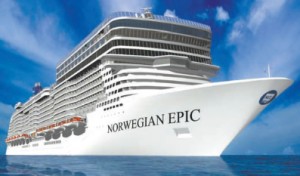 Norwegian Cruise Line (NCL) has revolutionized the concept of cruising on the high seas. Ranked the third largest cruise company in America, following behind carnival Corp. and Royal Caribbean Cruises Ltd, NCL learned to take risks in an effort to be innovative and to differentiate its ships from the competition. Taking risks has not always paid off but the free-style concept is certainly one that has.
NCL put freestyle version 1 into operation in the year 2000. Freestyle 2.0 followed in 2008 but it was with the freestyle 3.0 that NCL was able to truly revolutionize the cruise ship industry.
Launched on the ship Norwegian Epic, a ship which NCL boasts of as being the first modern cruise ship, the Freestyle 3.0 took freestyle cruising to the maximum zenith possible. The secret to success was underpinned by the NCL Epic’s liberal policy on board, its extensive menu options and unique entertainment packages.
One must note an important breakthrough. The cabins to be found on the NCL Epic are neither square nor rectangular but Instead at a curve. There are also some suites dubbed the Courtyard Suites which come with private access, 2 shared restaurants, a night club, swimming pool, sauna and even a fitness center.
If you thought that was all well think again. The Epic has the best entertainment in the cruise ship business featuring the best out of Las Vegas and by the best I refer to acts like Blue Man Group and Chicago’s Second City. I will never forget the time I spent on this marvelous ship, especially the time spent having drinks in the centralized area of staterooms that are on board to cater to solo travelers.
Posted in Business, Featured News